Thursday, April 13, 2006
又见彩虹
晚饭后刚出门,面前一片灿烂:天很亮,虽然厚重的雨云层压得很低;天滴答着雨声,但正前方暖暖的很宽的一个彩虹。外层金黄色,内圈绿色冷带较窄。心情豁然开朗了,几日来口腔发炎带来的痛苦亦觉得减弱稍许。向右边看,另一半的彩虹挂在乌云的另一端。虽细了些许,却一样的美丽。或许地上的色彩还不丰富,它也来在春光时节争奇斗艳。

Thursday, March 30, 2006
Cherry Blossom
A new season of cherry blossom has come..

(Take a look out of your window...Slow down...and Take a breathe...)

(Take a look out of your window...Slow down...and Take a breathe...)
Ancient Methane Sealed in Quartz

Ancient gas traped inside quartz (viewed in cross-polarized light).(Source: Ueno et al. Nature 2006, 440, 516)
The air bubbles sealed in ancient rocks carry the information on the atmosphere and the life during the past. In this quartz from Western Australia, scientists found metane in it and particually the isotope ratio C-13/C-12 is low. The low isotope ratio indicates that the methane had a biological origin. The results suggest that there might exist such organisms that produce methane and change the content of the atmosphere back to 700,000 years ago, the so-called Archean era.
Sunday, March 26, 2006
'Mona Lisa'-Made-in-China
Sneakers, T-shirts, Toys,....This list can go on and on. All have a common point: made in China. No matter where you are in today's world, it is almost unavoidable to buy all sorts of goods that are labeled with 'made-in-China'. And, 'Mona Lisa' is no exception either!
There is a small town called 'DaFen'(大芬) in the Shenzhen municipal area. The main business of this small town is to duplicate millions of world-renown oil paintings, from Mona Lisa to Sunflower, every masterpiece you can name it. The 60% of the oil paintings in the international market are made here. This town turns the art of oil-painting into an industry, in a way that artists may despise.
The business started in 1986 by a painter from Hong Kong. Then the business got boomed as the economy development of Shenzhen and then China. Like all the other goods made in China, the workers are mainly peasants. Some are illiterate and most only have middle school to high school education. For many of them, their parents and grand parents never know what is Mona Lisa or even see a real oil-painting work in their lives. The rapid development of Shenzhen turns them from peasants working in mud to the oil painters doing the remote art business. Their life would never be same.
Seen from another perspective, many famous painters, like Zhang Daqian, started their career to replicate other's work. Once their skills got matured and their fames got established, they revealed their true identities and became famous and rich too. How do you know if there is one or two Zhang Daqian will be born in the town of DaFen?
Some pictures can be found here.
http://pic.people.com.cn/GB/31655/4235936.html
Friday, March 17, 2006
Wait, Wait, Wait
Don't tell me....
What is in the Pandora's box?
Keep pursuing persistently for the one
What is in the Pandora's box?
Keep pursuing persistently for the one
Tuesday, March 14, 2006
天心 -- 天地之大德曰生
最近读张中行先生的《顺生论》,颇有醍醐灌顶之感。尤其第一分天心言人生之意义。
张先生乃实诚人也,读其书有如沐浴春风,如同朋友交心。先生之言不矫情做作,实事求是。先生虽专文学哲学,对科学却亦不含糊。
张先生乃实诚人也,读其书有如沐浴春风,如同朋友交心。先生之言不矫情做作,实事求是。先生虽专文学哲学,对科学却亦不含糊。
Sunday, February 26, 2006
All coin leads to China
On Feb 26 issue of The New York Times, there is an interesting article to view the Chinese trade surplus in a historical perspective. Here is the link to the article,
http://www.nytimes.com/2006/02/26/weekinreview/26bradsher.html?_r=1&oref=slogin
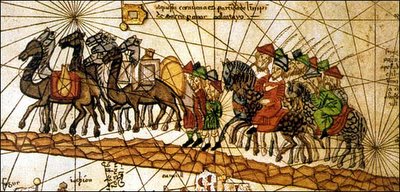
Silk road: Ancient Rome imports tons of silk and other goods from China, but have no many products that Chinese are interested in buying except glass.
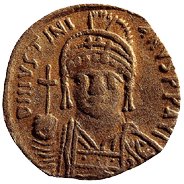
A gold Byzantine coin excavated from a Chinese tomb.
Today's China exports six times more of goods to the USA than to buy from it. This high trade surplus has caused a lot of trade conflicts, but not much on the price of the Chinese goods and services at home, except the inflation of the real estate price. This one way cash flow also happens at the silk road time before the dark age of Europe. However, the cash surplus does not cause the inflation in China in that time and now. People think the reason is that those surplus does not go into the circultation. Or the economy of China expands at a roughly same rate as its incoming cash. In today's circumstance, the central bank of China invests in Treasuries and mortgages on American homes and stacks up the US dollars. Even though that the US goverment has imposed high pressure on China to increase the value of the Chinese yuan, it has no much effect to this trade inbalance. This re-evaluation seems not the final solution of the problem. China has a big pool of cheap labor, although the price of the labor is going to increase now and in the near future. However, the increases is still quite small compared to the trade scale. In the century of 1800's, British sustained its high trade surplus by positioning millions of Chinese with optium. But today, China wants high-tech stuff from the United States that the states won't sell. Reasons? China is not a 'democratic' country, and its bad record of human rights and intellual property protection issue...
http://www.nytimes.com/2006/02/26/weekinreview/26bradsher.html?_r=1&oref=slogin
Silk road: Ancient Rome imports tons of silk and other goods from China, but have no many products that Chinese are interested in buying except glass.


A gold Byzantine coin excavated from a Chinese tomb.
Today's China exports six times more of goods to the USA than to buy from it. This high trade surplus has caused a lot of trade conflicts, but not much on the price of the Chinese goods and services at home, except the inflation of the real estate price. This one way cash flow also happens at the silk road time before the dark age of Europe. However, the cash surplus does not cause the inflation in China in that time and now. People think the reason is that those surplus does not go into the circultation. Or the economy of China expands at a roughly same rate as its incoming cash. In today's circumstance, the central bank of China invests in Treasuries and mortgages on American homes and stacks up the US dollars. Even though that the US goverment has imposed high pressure on China to increase the value of the Chinese yuan, it has no much effect to this trade inbalance. This re-evaluation seems not the final solution of the problem. China has a big pool of cheap labor, although the price of the labor is going to increase now and in the near future. However, the increases is still quite small compared to the trade scale. In the century of 1800's, British sustained its high trade surplus by positioning millions of Chinese with optium. But today, China wants high-tech stuff from the United States that the states won't sell. Reasons? China is not a 'democratic' country, and its bad record of human rights and intellual property protection issue...
Subscribe to:
Posts (Atom)
